Special Projects
X Thread Copy V2
Main post
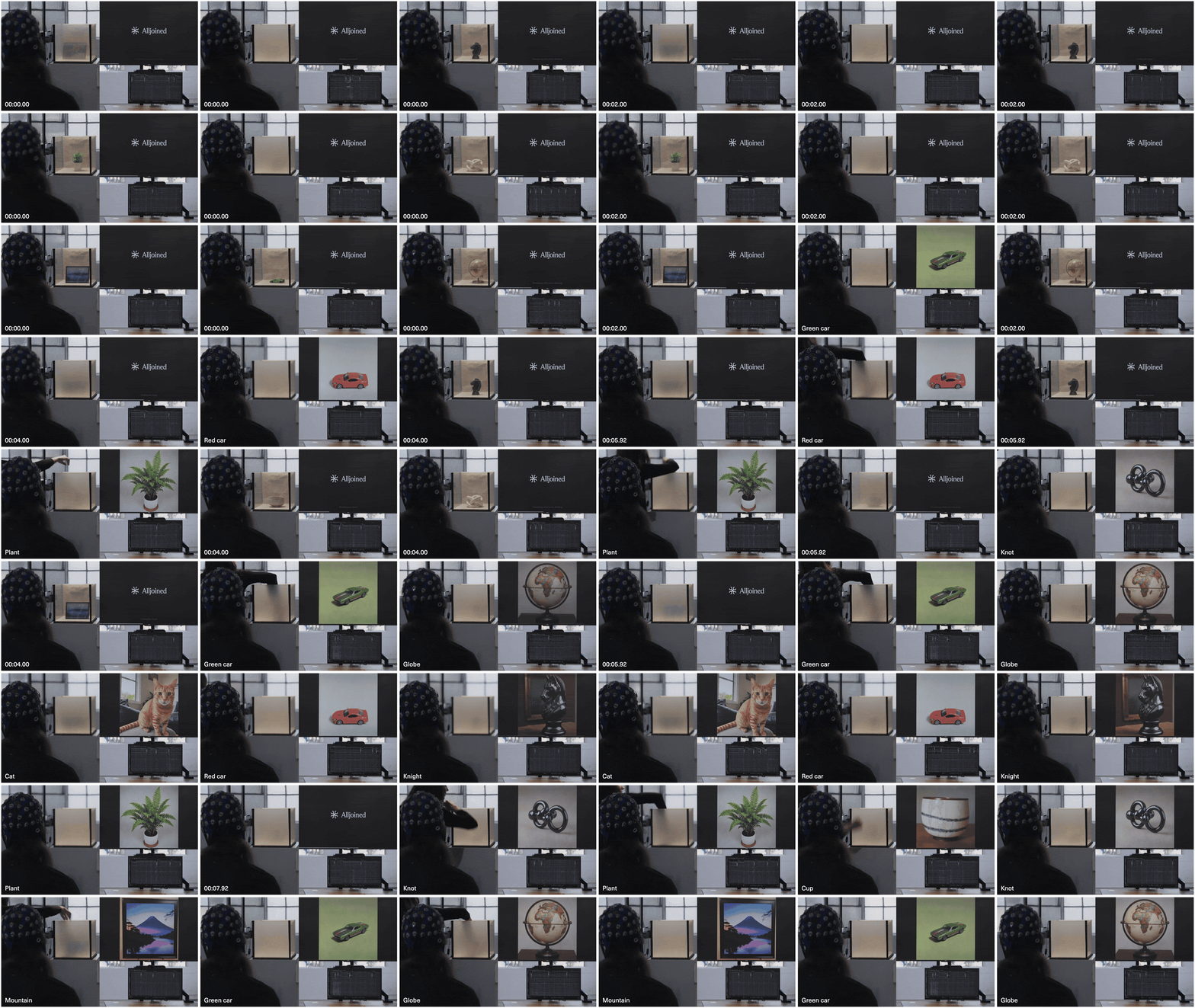
Introducing AIR-0, a model that decodes what a person is attending to directly from brain scans.
Using only noninvasive brain data, we can generate an image from scratch in real time that depicts where a person is focusing their attention
This is the first of a new generation of algorithms that can read the shape of thoughts directly from brain activity.
Alternative lineThis is the first of a new generation of algorithms that create and read brain embeddings, a new space of mapping for thoughts, concepts and emotions.
Open in Google DriveIn the thread, replies under the main post
LLM’s already understand the relationship of words through embeddings they use to create sentences, code, and videos.
We need a similar embedding space for the brain.
Previously, building this model would have required implants because all non-invasive methods were “too noisy”.
With deep learning, use non-invasive we can locate concepts and thoughts, map them, and express them in any modality we want.
For this demo we chose image.
If you’re curious about the process, here are some interesting scientific facts that we learned as we worked on this task:
It’s not a huge surprise but scale matters.
- Performance improves log-linearly with the data we collect
- Retraining on many people shortens fine-tuning for each new person.
- When done properly, it takes fewer than 20 hours of data
So much of what people experience is invisible to the technology we rely on.
We think models need a complete view of the human system if we’re going to reach real, productive alignment with AI.
Our goal is to build a new communication layer. One that uses rich brain data, collected and communicated non-invasively, to bridge the gap.
Check out our progress here.
 AlljoinedFrom alljoined.stage.systems